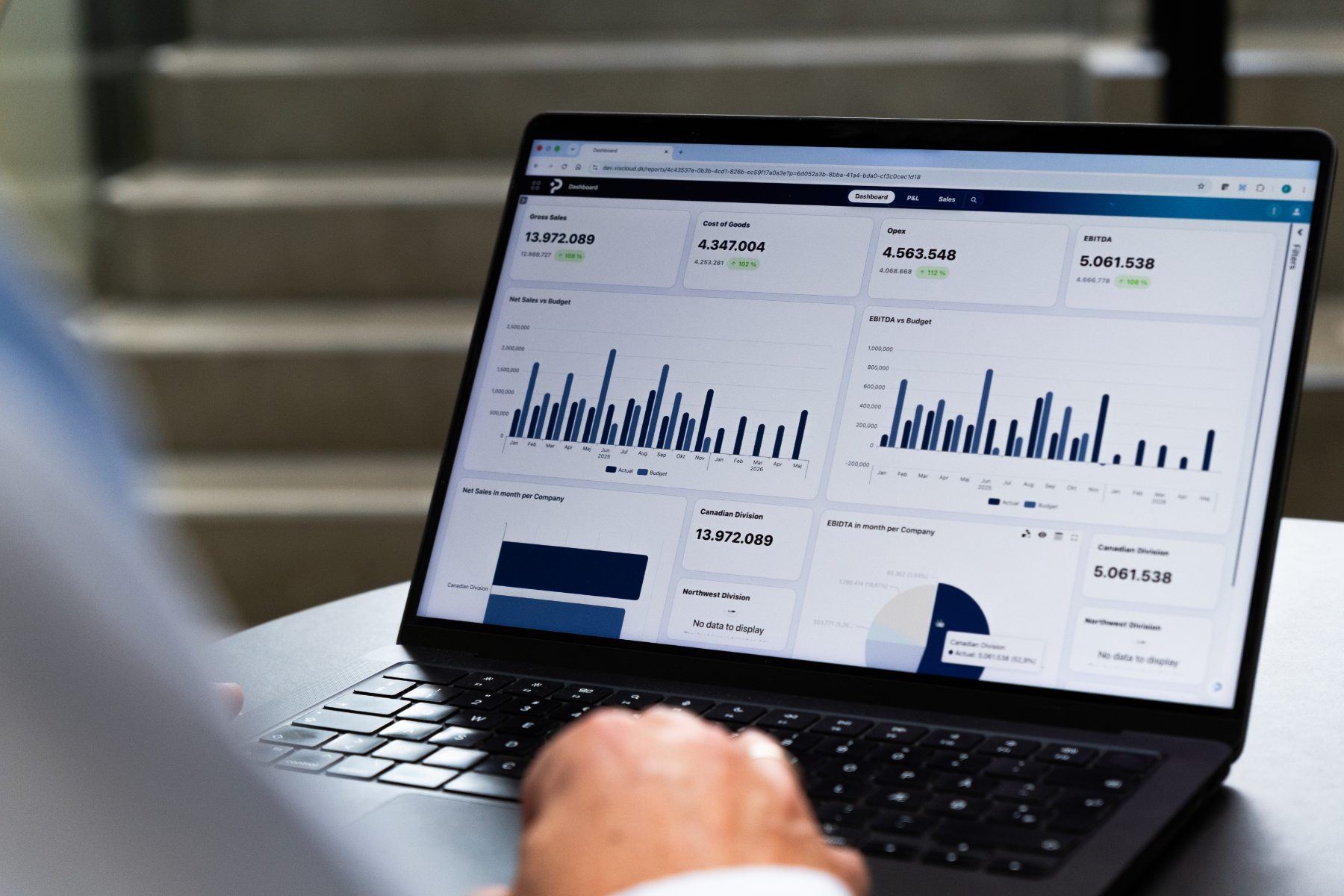
SALES BUDGETING
From sales expectations to a coherent budget
Build the sales budget on the drivers that actually create revenue—such as volume, prices, discounts, products, customers, and markets. With PLANNORS, Sales can work with the commercial assumptions, while Finance can see how they connect to the budget and forecast.
When sales assumptions change, the financial implications can be calculated through the model, so the sales budget does not stand alone but becomes part of the company’s overall planning.

What does it mean for the budget when the sales forecast changes?
More units sold, new prices, changed discounts, or a different product mix affects more than revenue. In PLANNORS, sales drivers can be connected to the financial relationships, enabling you to analyse the implications for, for example, revenue, cost of goods sold, and contribution margin—and, where relevant, through to the balance sheet and liquidity.
WHEN SALES AND FINANCE PLAN SEPARATELY
Where do the figures in the sales budget actually come from?
The sales budget is based on more than a single revenue figure. Behind the number are expectations about, among other things, volume, prices, discounts, customers, products, and markets—and those assumptions change continuously.
When Sales works with one version and Finance subsequently has to consolidate, validate, and transfer the figures to the finance budget, new spreadsheets, manual handovers, and different interpretations of the same expectations quickly arise.
This makes it harder to understand what drives the sales budget—and what changes in sales expectations mean for the company’s financial plan.

FROM SALES DRIVER TO FINANCIAL IMPACT
See what sits behind revenue
In PLANNORS, the sales budget can be built around the dimensions and drivers that are relevant to your business—such as products, customers, markets, volume, prices, and discounts.
This makes it possible to work in greater detail with where revenue is expected to come from, which assumptions the expectation is based on, and how changes affect the budget and forecast.
When the sales plan changes, the relevant financial effects can be calculated through the budget model, giving Sales and Finance a stronger basis for both planning and performance follow-up.
SALES BUDGETING IN PLANNORS
From sales expectation to a shared plan
The sales organisation can budget and forecast across the dimensions that make sense for the business, while Finance maintains alignment with the overall financial plan.

Continuous sales forecasting
Continuously update expectations for volume, prices, and revenue so the forecast can track developments throughout the year. Historical data can be used as a starting point, while Sales contributes current market knowledge.

Scenarios at sales level
Test different developments in, for example, volume, prices, or discounts, and see the financial consequences without changing the approved budget.

Sales budgeting across dimensions
Build the sales budget across the dimensions that make sense for your business—such as product, customer, channel, region, market, or salesperson—and aggregate the figures at the levels management follows.

Link to the finance budget
Include changes in the sales budget in the overall financial plan, so Finance can follow the impact on revenue, cost of goods sold, contribution margin, and other financial relationships.

Role-based access and governance
Define who can view and edit different customers, products, markets, or organisational areas. Finance retains control of the process, while relevant users can contribute directly to the budget and forecast.
MEET PLANNORS
Built for the way Finance works today
Finance must work faster, involve more people, and create a stronger decision-making foundation—while ensuring complex processes, data, and governance remain connected.
Hear our CTO, Flemming Nielsen, explain how PLANNORS brings budgeting, forecasting, consolidation, and reporting together in a single cloud-native Finance & Operations Platform—and how AI is integrated directly into the platform for, among other things, insights, variances, and forecasting.


Customer statement · DST-CHEMICALS
“VIS has been a core system for us for many years and has been an important part of our budgeting process, especially when our sales department contributes to the budget and forecast. With PLANNORS, we expect our salespeople’s work in the platform to become easier and more efficient.”
Mogens Hørlück-Pedersen
CFO | DST-CHEMICALS

EXPLORE MORE BUDGET PROCESSES
Build on the sales budget
The sales budget is one part of overall planning. Explore the PLANNORS solutions that link sales expectations into the company’s other budgeting and forecasting processes.
Financial budgeting
Carry sales assumptions through to the income statement, balance sheet, and cash flow.

Cost budgeting
Work with costs, allocations, and drivers in alignment with the finance budget.

Balance sheet budgeting
Go deeper into budgeting for assets, liabilities, and equity.

Budgeting in Power BI
Enter and adjust the budget where users already analyse data.

Sales & Operations Planning
Connect the sales forecast to capacity, inventory, procurement, and the overall financial plan.
Next step
Sales and Finance in the same budget
Book a demo and see how PLANNORS connects sales budgets and forecasts with the financial plan—from sales drivers and revenue to contribution margin, profit, and liquidity.