SALES & OPERATIONS PLANNING
Balance demand, capacity, and financials
Connect the sales forecast with inventory, procurement, production, and capacity—and see the financial implications of the plan. With Sales & Operations Planning in PLANNORS, sales, supply chain, and finance can work with aligned assumptions and assess whether the operational plan supports expected demand.
When assumptions change, you can analyse the impact on budget, forecast, profit, and cash flow and adjust the plan while there is still time to act.
What happens when the sales forecast changes?
A higher sales forecast may require more inventory, larger purchases, and increased capacity. A lower forecast may leave the business with excess inventory and tied-up capital. PLANNORS makes it possible to analyse the relationship between demand, capacity, and financials, so changes to the plan can be assessed across sales, supply chain, and finance.
WHEN THE SALES AND OPERATIONS PLAN IS NOT ALIGNED
Can you deliver what sales expects to sell?
Sales has a forecast. Supply chain plans inventory, procurement, and capacity. Finance must understand what the plans mean for the company’s financial performance.
When the different plans are not continuously aligned, imbalances may only become apparent when inventory grows, capacity is strained, delivery performance is challenged, or financial expectations change.
The issue, therefore, is not necessarily that any single plan is wrong. It is that the business lacks alignment between demand, operational capacity, and the financial implications.
When assumptions change, you must be able to see the consequences and assess how the plan should be adjusted—while there is still an opportunity to respond.

FROM SALES FORECAST TO FINANCIAL IMPACT
Sales, operations, and finance on the same plan
Sales & Operations Planning is about more than reconciling a sales forecast with a production plan. Changes in demand can affect inventory, procurement, production, and capacity—and ultimately the company’s profit and cash flow.
In PLANNORS, operational assumptions can be connected to the financial plan, enabling you to analyse impacts across functions and create a stronger basis for balancing demand, capacity, and financials.
FROM CHANGE TO IMPACT
See the financial effect of the operational plan
A change in the sales forecast rarely stops in the sales department. Higher demand may require more capacity and larger purchases. Lower volumes can affect inventory tied up in stock. Changes in raw material prices or lead times can affect production, margin, and cash flow.
In PLANNORS, the relationships can be modelled so changes in operational drivers flow through to the financial plan.
This makes it possible to work with the question:
What does the change mean for the business—and for the financials?
S&OP IN PLANNORS
From demand to financial impact
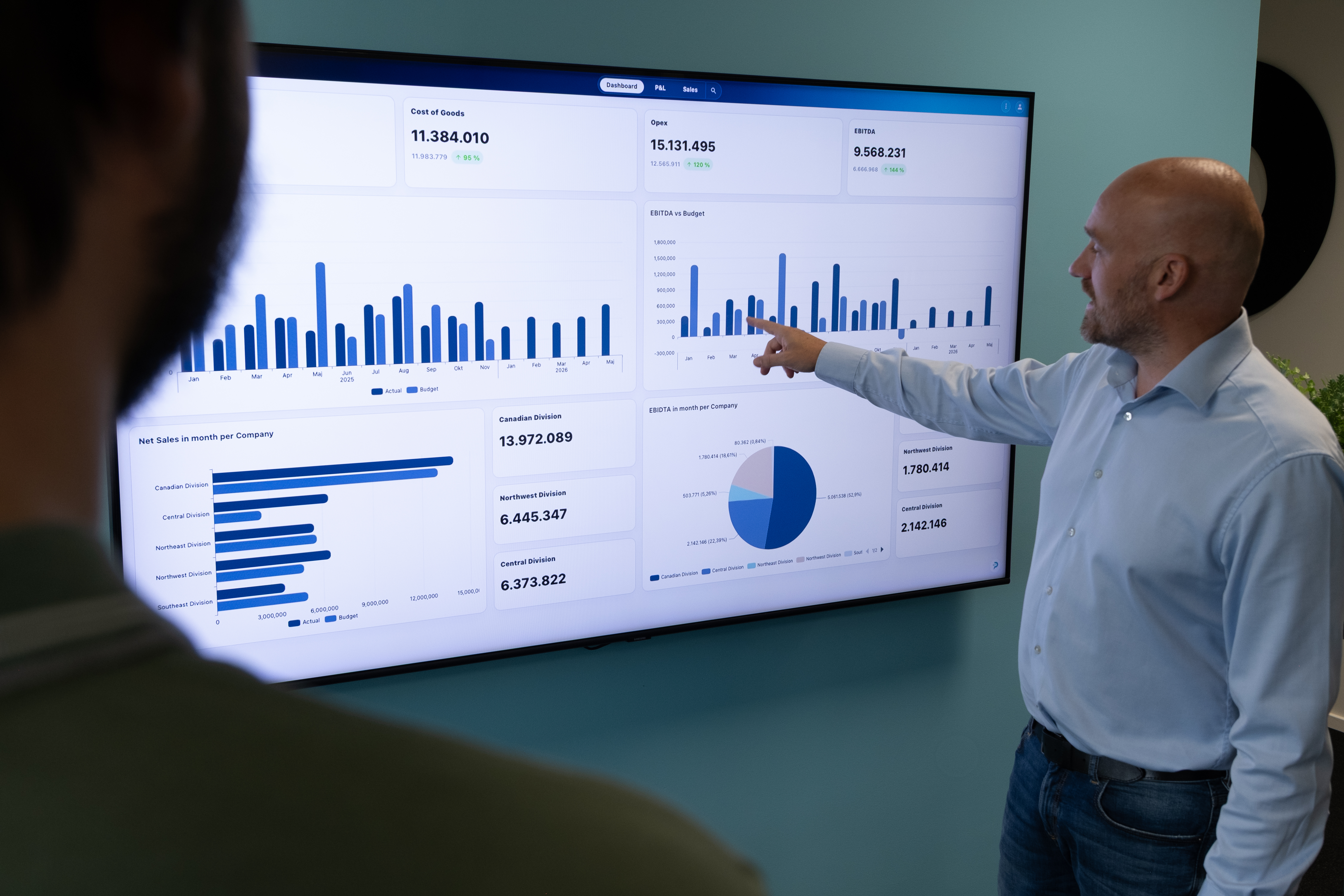
PLANNORS creates alignment across the core elements of Sales & Operations Planning, so sales, operations, and finance can work with different perspectives on the same plan.

Sales forecast
Plan expected demand across customers, products, markets, and channels, and use the sales forecast as input for subsequent operations and financial planning.

Inventory and backorders
Track inventory levels, backorders, and tied-up capital, and see where the plan may create imbalances between demand, delivery performance, and inventory.

Capacity and production
Compare demand with production, staffing, machines, resources, and lead times, so capacity requirements become visible as part of the plan.

Procurement and raw materials
Include raw material prices, suppliers, lead times, and availability, and see how changes can affect production and financials.

Budget and forecast
Link the operational plan to budget and forecast, so Finance can track the financial implications of changes in demand, capacity, procurement, and inventory.

Profit and cash flow
See how the overall plan affects profit, balance sheet, and cash flow, and the KPIs management uses for ongoing performance management.
SCENARIOS & DRIVERS
What happens if the plan changes?
What happens to capacity if demand increases? What do longer lead times mean for inventory? And how do higher raw material prices affect margin and cash flow?
With PLANNORS, different assumptions and scenarios can be analysed on the same data foundation as the current plan. This enables Finance & Operations to assess the consequences of different developments before the plan is adjusted.
Intro to PLANNORS
Built for the way finance works today
Finance must work faster, involve more people, and create a stronger basis for decision-making—while ensuring that complex processes, data, and governance are aligned.
Hear our CTO, Flemming Nielsen, explain how PLANNORS brings budgeting, forecasting, consolidation, and reporting together in one cloud-native Finance & Operations Platform—and how AI is integrated directly into the platform for, among other things, insights, variances, and forecasting.


Customer testimonial · DST-CHEMICALS
“VIS has been a core system for us for many years and has been an important part of our budgeting process, especially when our sales department contributes to budget and forecast. With PLANNORS, we expect our salespeople’s work in the platform to become easier and more efficient.”
Mogens Hørlück-Pedersen
CFO | DST-CHEMICALS

RELATED SOLUTIONS
Build on the S&OP plan
Sales budget
Build the sales budget on the same assumptions as the S&OP plan.

Scenario Planning
Test what changes in demand and capacity mean for profit.

Reporting
Follow up on the plan with reporting across sales, operations, and finance.
Next step
See how S&OP can bring your planning together
Book a demo based on your sales and operations planning. We will show how PLANNORS can connect forecast, demand, capacity, inventory, and financial implications on a single shared data foundation.