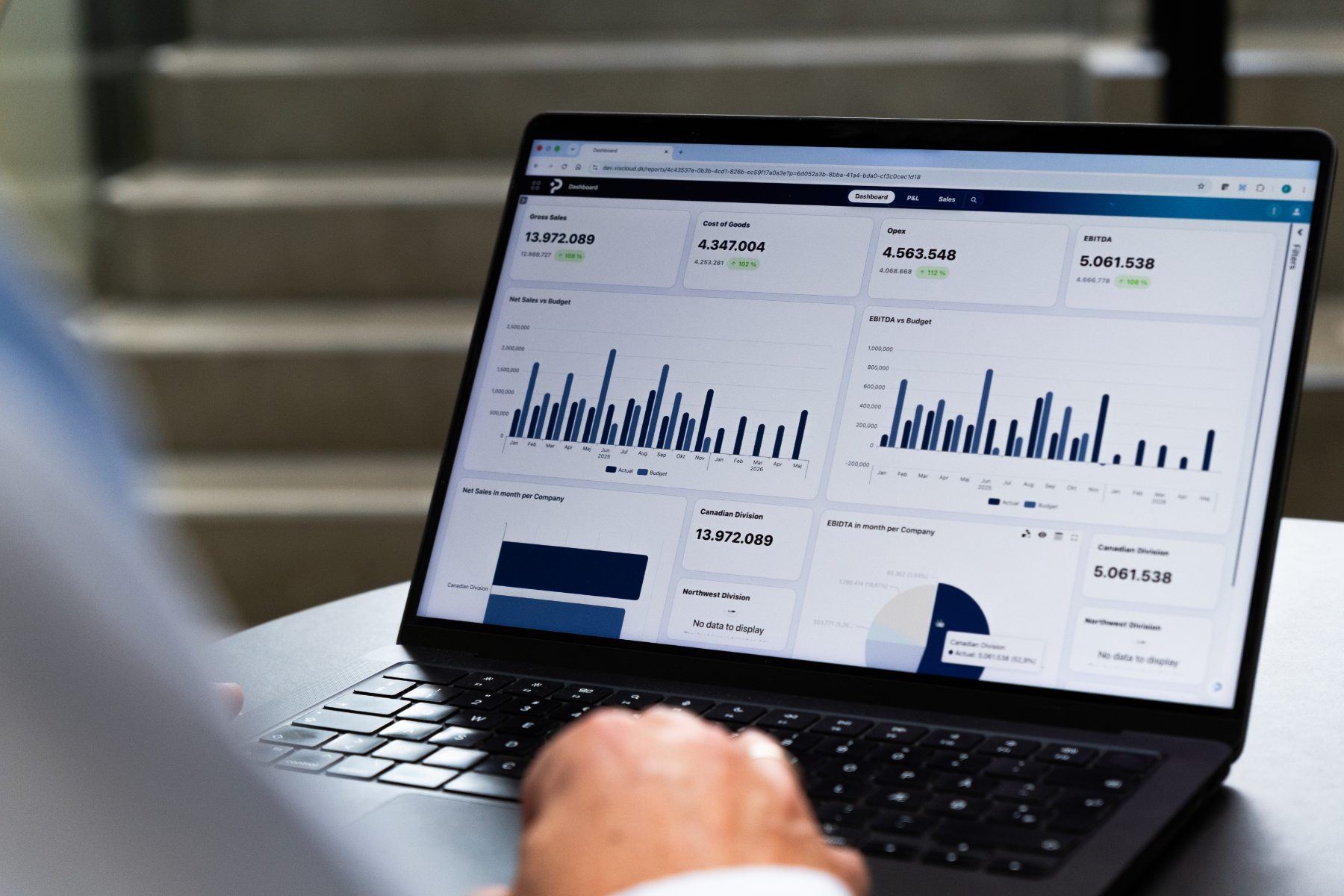
CAPITAL EXPENDITURE AND INVESTMENT BUDGETING
See the financial impact before the investment is made
Plan investments and see how timing, amount, and other assumptions affect the company’s finances. In PLANNORS, the investment plan can be linked to depreciation, profit and loss, balance sheet, and liquidity, enabling Finance to view the financial consequences across periods.
When investments are moved, changed, or added, the impact can be carried forward in the financial plan—without manual bridge calculations between separate spreadsheets.
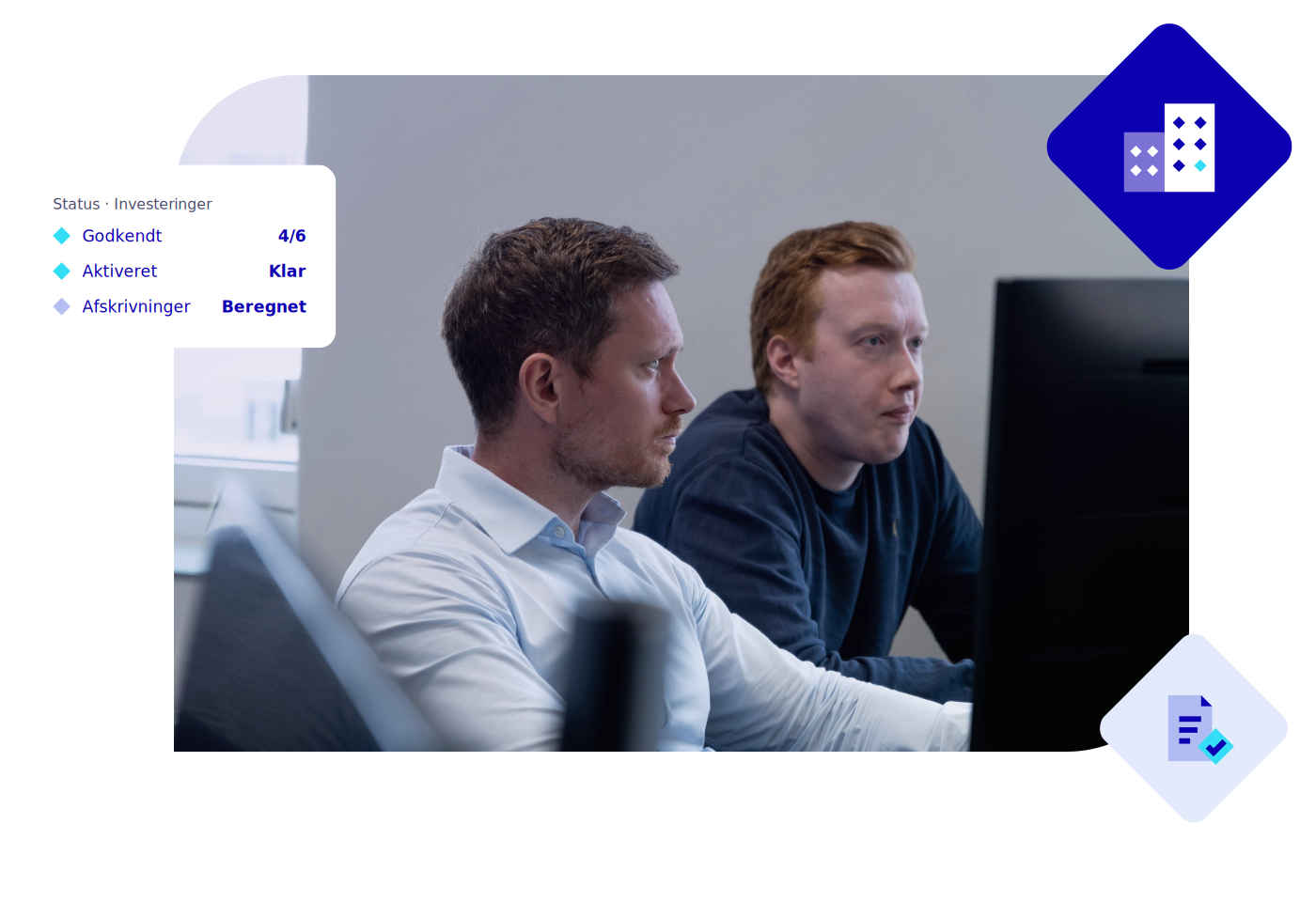
From investment plan to full financial visibility
What do new investments mean for the company’s profit and loss, balance sheet, and liquidity—both now and in the years ahead?
With PLANNORS, capex budgeting becomes an integrated part of financial planning. Investments, depreciation, and liquidity effects can be calculated and included directly in budgets and forecasts.
This gives Finance a consolidated view of the financial consequences of investments and a stronger basis for prioritising and making the right decisions.
WHEN THE INVESTMENT PLAN STANDS ALONE
What happens to the budget when the investment is moved?
A new machine, a production facility, or a real estate investment is not just a single line item in the capex budget. The investment affects depreciation, profit and loss, the balance sheet, and liquidity—often over several years.
When the capex and investment budget is managed separately from the wider budgeting and forecasting process, Finance must manually calculate and carry the consequences forward. If an investment is moved from one period to another, the amount changes, or it is not executed at all, multiple parts of the financial plan must be adjusted.
This means Finance must not only maintain the investment plan—but also ensure that the effects of each change are correctly reflected in the rest of the budget.
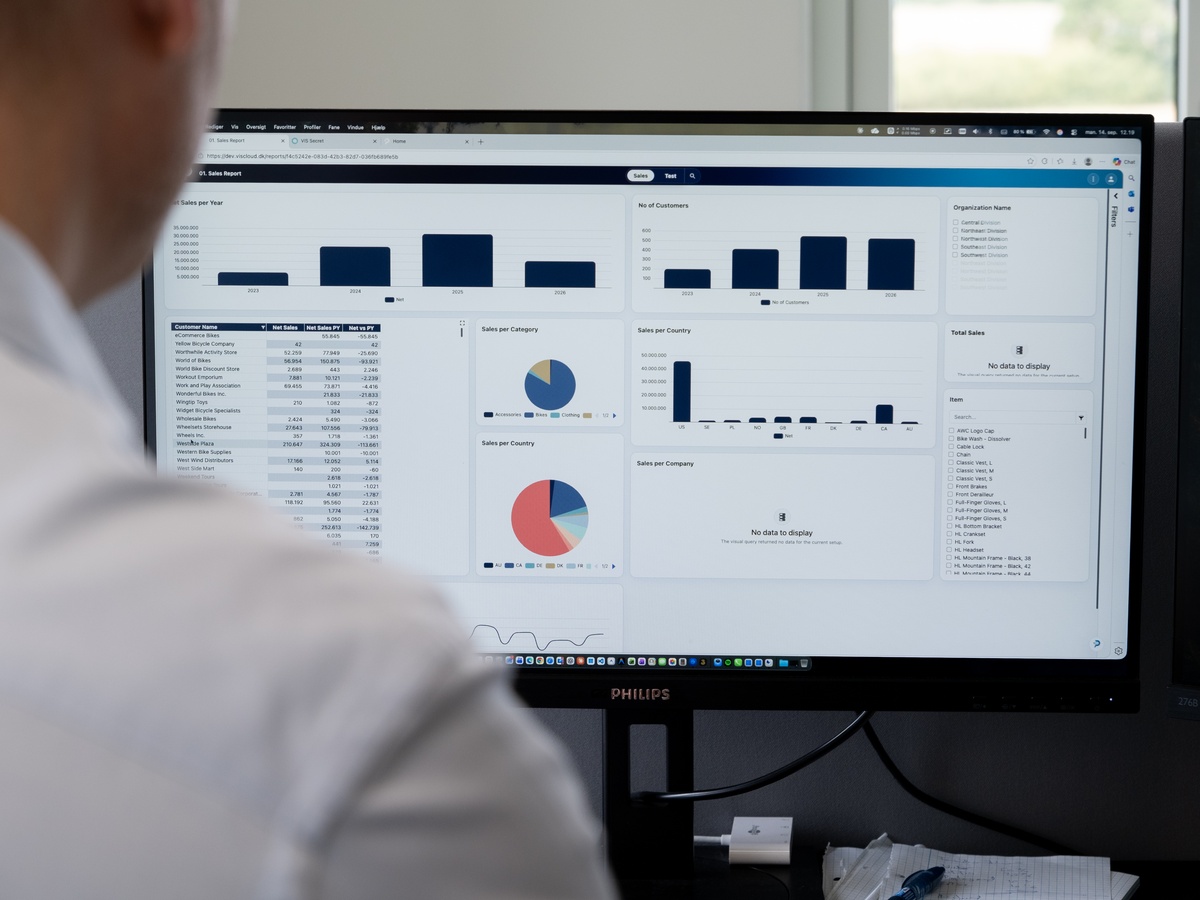
FROM INVESTMENT TO FINANCIAL IMPACT
Let the investment plan flow through into the budget
In PLANNORS, planned investments can be included in the financial budget model together with relevant assumptions, including timing, amount, and depreciation.
When the investment plan changes, the derived effects can be carried forward to profit and loss, the balance sheet, and liquidity. This makes it easier to work with investments across periods and assess how changes affect the company’s overall financial plan.
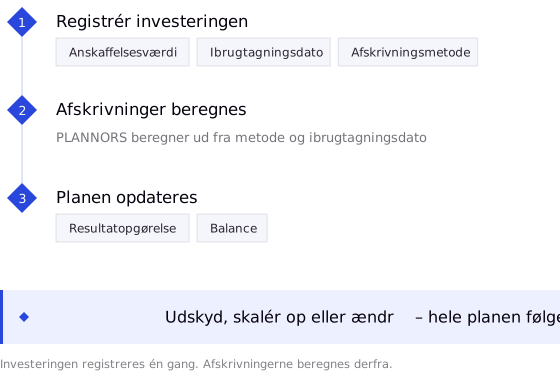
The investment is recorded once. Depreciation is calculated from there.
CAPEX BUDGETING IN PLANNORS
From investment plan to ongoing follow-up
Plan investments, calculate the financial impact, and monitor performance on the same data foundation as the company’s overall budget and forecast.

Investment planning
Plan investments with, for example, acquisition cost, in-service date, and depreciation method, and let the assumptions flow directly into the financial plan.

Automated depreciation
Define depreciation rules for each individual investment, and have depreciation calculated across the relevant periods and included in the income statement and balance sheet.

Link to financial budget and forecast
When an investment is moved, changed, or removed, the consequences can be carried forward into the overall financial plan without manual adjustments across separate models.

Investment scenarios
Compare different investment scenarios before making a decision. For example, explore the impact of changes in timing, size, or financing, and see the effect on profit and loss, the balance sheet, and liquidity.

Budget follow-up on investments
Track budgeted and actual capital expenditures and identify variances between the planned investment and actual performance.
MEET PLANNORS
Built for how finance works today
Finance needs to work faster, involve more people, and create a stronger basis for decision-making—while ensuring that complex processes, data, and governance remain connected.
Hear our CTO, Flemming Nielsen, explain how PLANNORS brings budgeting, forecasting, consolidation, and reporting together in a single cloud-native Finance & Operation Platform—and how AI is integrated directly into the platform for, among other things, insights, variances, and forecasting.


Customer testimonial · DSHwood
“We have been a VIS customer for several years and have been very satisfied with the solution. When we saw the new PLANNORS platform, we had no doubt that we wanted to convert. In particular, the platform’s ease of use, accessibility, and speed made the decision easy.”
Lars Kunz
CFO | DSHwood

EXPLORE MORE BUDGETING PROCESSES
Build on the investment plan
The capex and investment budget affects several parts of the financial plan. Explore the PLANNORS solutions most closely linked to investments, depreciation, financing, and the overall budgeting process.
Financial budgeting
See the investment’s impact on profit and loss, the balance sheet, and cash flow.

Balance sheet budgeting
Link investments, fixed assets, and depreciation to the projected balance sheet.
Liquidity management
See how planned investments affect the company’s future liquidity.

Scenario planning
Compare different investment timings and assumptions before making a decision.

Reporting
Track budget, actual investments, and variances on the same data foundation.
Next step
See the investment in the overall financial plan
Book a demo and see how PLANNORS links investment planning with depreciation, profit and loss, the balance sheet, and liquidity—and how changes in assumptions can be tracked throughout the overall plan.