LIQUIDITY MANAGEMENT
Stay ahead of liquidity—not behind it
Gain insight into the company’s future liquidity before action is required. PLANNORS brings together budget, forecast, and the key cash flow drivers so Finance can anticipate liquidity needs and track developments across entities, currencies, and periods.
See how changes in revenue, costs, investments, and payment terms affect liquidity. This enables you to identify potential liquidity challenges in time, optimise capital allocation, and make better financing and investment decisions.
What happens to liquidity when the business changes?
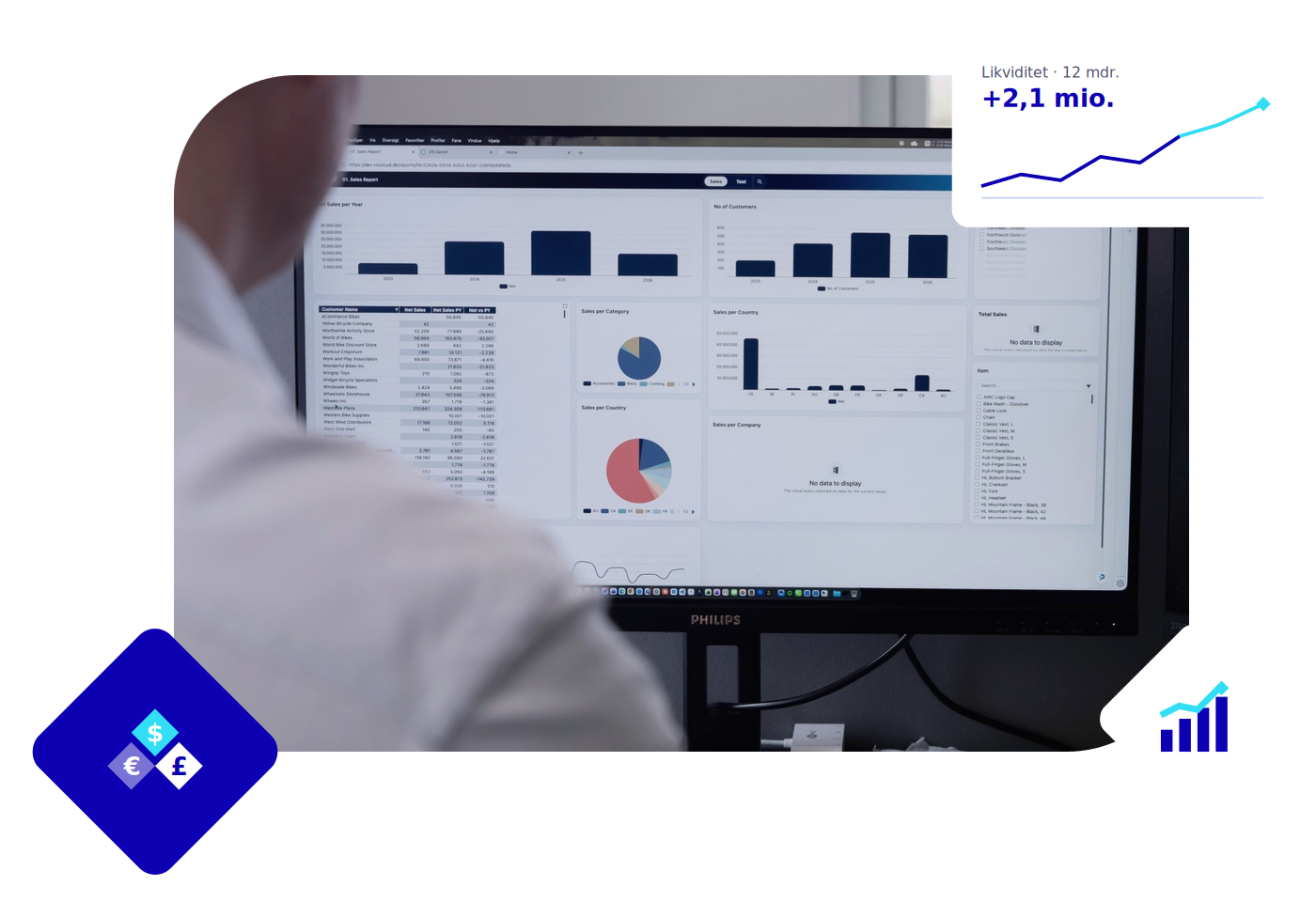
Revenue, payment terms, inventory, costs, and investments do not only affect earnings—they also affect when cash flows into and out of the company. PLANNORS makes it possible to see the expected impact on cash flow and liquidity when assumptions change.
WHEN LIQUIDITY IS MANAGED RETROSPECTIVELY
You know today’s liquidity. But what about in three months?
Liquidity is one of the company’s most important management metrics, yet many companies still rely on manual spreadsheets and static cash flow statements that take time to compile and are quickly overtaken by new assumptions.
When revenue changes, customers pay later, inventory grows, or an investment is moved, Finance must be able to understand what this means for expected liquidity. If calculations and data first have to be compiled and updated manually, it becomes difficult to respond in time.
The challenge is therefore not only knowing how much liquidity the company has today—but being able to see where it is heading and what is driving the development.

FROM DRIVERS TO LIQUIDITY
From sales to a consolidated financial overview
Customer payment terms, supplier payment terms, and capital tied up in inventory are among the factors that affect the company’s liquidity.
PLANNORS connects these relationships in the same model, so changes in, for example, revenue, cost of goods sold, inventory, costs, and payment terms flow through to the income statement, balance sheet, and liquidity.
When budget or forecast assumptions change, the liquidity forecast can therefore be updated based on the new expectations.
Simplified overview of the budget’s interdependencies.
LIQUIDITY MANAGEMENT IN PLANNORS
From liquidity status to forward-looking management
Budgets, forecasts, and operational drivers are linked to the company’s cash flows, enabling you to track expected liquidity development and analyse the consequences when assumptions change.

Driver-based cash flow
Link the liquidity forecast to the assumptions that drive the business. When the budget, forecast, or operational drivers change, the impact can be carried through to expected liquidity.

Automatic downstream effects
Let the model’s interdependencies carry on. Accounts receivable, accounts payable, VAT, inventory, investments, and other cash flows can be updated when the underlying assumptions change.

Scenarios and liquidity forecasts
Explore the consequences before they occur. Compare scenarios and see how changes in, for example, revenue, payment terms, inventory, or investments affect liquidity.

Overview of cash flows
Track expected liquidity development across entities, currencies, and periods, and analyse the movements driving the development.

AI-assisted analysis
Use AI to support the analysis of trends and variances and to identify more quickly the areas that require the Finance team’s attention.

Governance and traceability
Work with roles, access, workflows, and audit history around budgets and forecasts, so changes take place within the same controlled framework as the rest of the Finance process.
SCENARIOS & FORECASTING
What happens to liquidity if assumptions change?
What do longer customer payment terms mean? What happens if inventory ties up more capital? Or if a major investment is brought forward?
When budget, forecast, and liquidity work from the same data foundation, different assumptions and scenarios can be analysed without building separate spreadsheet models. This enables Finance to see the expected consequences and respond earlier.
MEET PLANNORS
Built for how finance works today
Finance must work faster, involve more people, and create a stronger decision-making foundation—while ensuring that complex processes, data, and governance fit together.
Hear our CTO, Flemming Nielsen, explain how PLANNORS brings budgeting, forecasting, consolidation, and reporting together in one cloud-native Finance & Operation Platform—and how AI is integrated directly into the platform for, among other things, insights, variances, and forecasting.


Customer testimonial · DSHwood
“We have been a VIS customer for a number of years and have been very satisfied with the solution. When we saw the new PLANNORS platform, we had no doubt that we wanted to convert. The platform’s ease of use, accessibility, and speed in particular made the decision easy.”
Lars Kunz
CFO | DSHwood

RELATED SOLUTIONS
Build on the liquidity forecast

Budgeting and forecasting
The liquidity forecast is based on the budget and forecast. Bring them together on the same data foundation.

Balance sheet budgeting
See how accounts receivable, accounts payable, and inventory affect the balance sheet and liquidity.
Scenario planning
Calculate what happens to liquidity when assumptions change.
Next step
See what PLANNORS can do for your liquidity management
Book a demo based on your own processes. We will show how budgets, forecasts, and operational drivers can be linked to the liquidity forecast, giving you a more dynamic view of the company’s expected cash flow.