Platform
From data to decisions – unified in one Finance & Operations Platform
PLANNORS is a cloud-native Finance & Operations Platform that brings budgeting, forecasting, consolidation, reporting, and analysis together in one integrated solution. The platform connects data from ERP systems, Microsoft Fabric, data warehouses, Power BI, and more, creating a shared foundation for the company’s financial and operational performance management.
With integrated AI, automation, and strong governance, PLANNORS makes it easier to handle complex processes, large data volumes, and international group structures. The result is less manual work, greater control, and more time for analysis and decision-making.
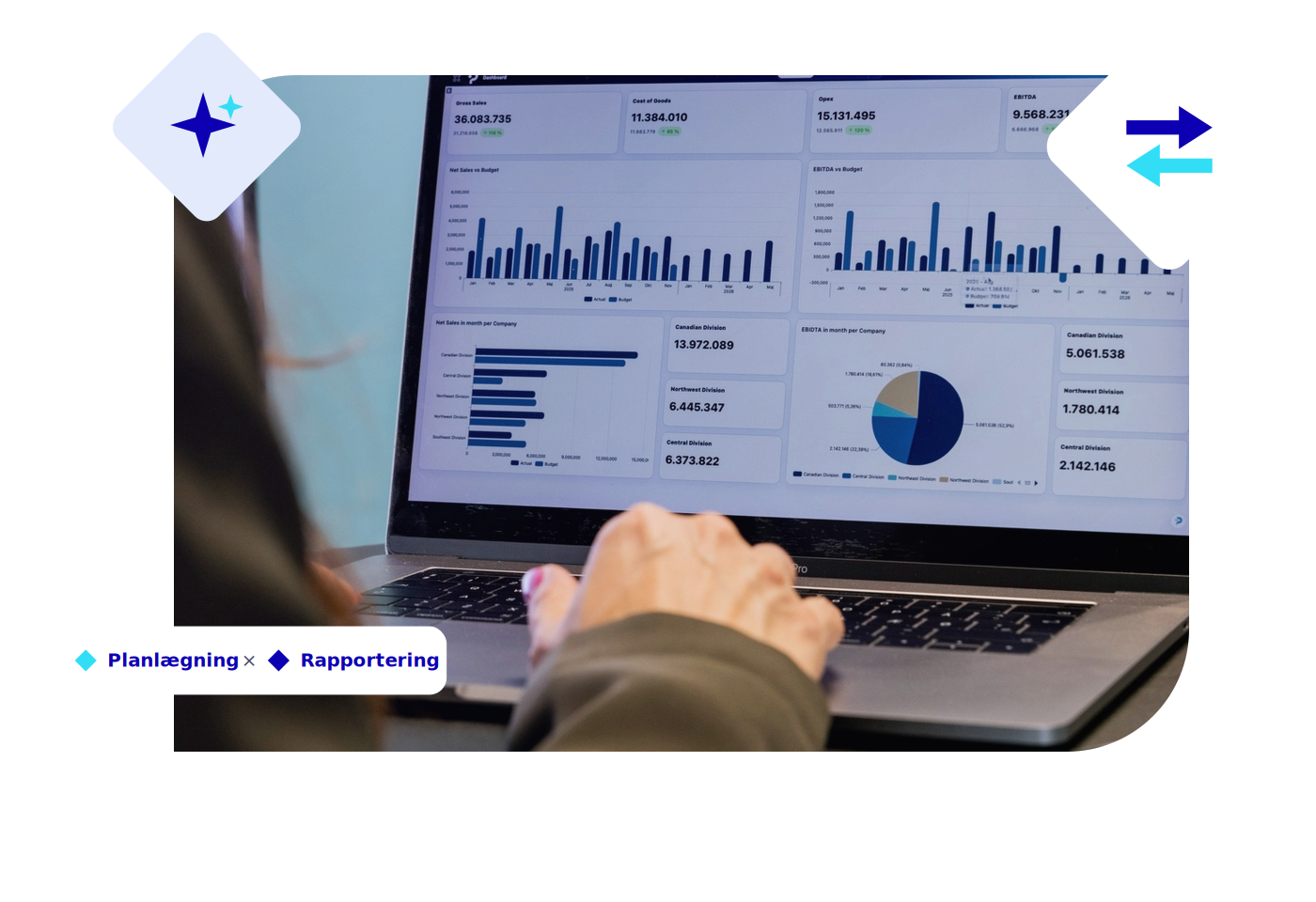
Built for complexity. Easy to work with.
At the core of PLANNORS is a multidimensional planning model, where all relationships between companies, departments, products, customers, and other business dimensions are managed centrally. When an assumption changes, related budgets, forecasts, and reports are updated automatically across the organization.
Overview
Four layers. From your data to Finance and decisions.
PLANNORS builds on the data landscape you already have. Data can be integrated from, among other sources, ERP systems, Microsoft Fabric, and data warehouses, and used in PLANNORS and Power BI for budgeting, forecasting, consolidation, reporting, and analysis.
The platform’s architecture connects data sources, integration, the multidimensional PLANNORS model, and the reports, dashboards, and analyses that users work with.
This creates a coherent path from data and assumptions to planning, analysis, and decisions— with cloud, AI, governance, and security as an integral part of the platform.

THE PLATFORM
Built for Finance. Ready for complexity.
PLANNORS combines modern cloud technology with more than 30 years of experience in Enterprise Performance Management. The platform is developed for organizations where Finance must handle many entities, dimensions, users, and business processes—while maintaining structure, control, and visibility.
Instead of piecing together multiple standalone tools, PLANNORS supports budgeting, forecasting, consolidation, reporting, and analysis on a unified platform that can be expanded as the business’s needs evolve.
Start where the need is greatest—and build from there.

Cloud-native. AI-integrated. Close to Microsoft.
The PLANNORS Platform is cloud-native, with AI integrated directly into the platform for analysis, explanations, and insights. PLANNORS is tightly integrated with Power BI, allowing users to enter budgets and forecasts directly in Power BI.

Security and governance.
PLANNORS consolidates financial data in a controlled environment with access control, governance, and an audit trail. This gives Finance control over who can access data and how it is used—also when AI is applied.

Greater efficiency. More time for analysis.
PLANNORS reduces manual workflows in budgeting, forecasting, consolidation, and reporting. Automation and connected data free up time in Finance, so it can be used for analysis, follow-up, and better decision support.

Built for complexity. Easy to use.
Advanced financial management does not have to mean a heavy user experience. PLANNORS combines multidimensional planning and complex data structures with a modern, intuitive interface.
Get started
Start simple—or start structured
PLANNORS does not have to begin with a major transformation. Start with a clearly defined need and expand the solution as the organization evolves—or choose a structured implementation that includes multiple processes, data sources, and users from the outset.
The approach depends on your existing data landscape, processes, and level of ambition.

GOVERNANCE & SECURITY
Control of data. Control of access.
Finance works with some of the company’s most sensitive data. That is why security and governance must not sit outside the platform.
PLANNORS makes it possible to manage access and permissions so users can work with the data and processes relevant to their responsibilities. At the same time, an audit trail provides better control over changes and processes across the organization.
This is also the foundation for bringing AI closer to Finance data without making AI a separate tool outside the platform where the work takes place.
MEET PLANNORS
Built for the way Finance works today
Finance needs to work faster, involve more people, and create a stronger decision-making foundation—while ensuring complex processes, data, and governance fit together.
Hear our CTO, Flemming Nielsen, explain how PLANNORS brings budgeting, forecasting, consolidation, and reporting together in one cloud-native Finance & Operations Platform—and how AI is integrated directly into the platform for, among other things, insights, variances, and forecasting.